
Audit Overview
Your store's untapped revenue potential — and how to unlock it
Why We Created This Audit
We analyzed https://mysleepyhead.com the same way we've audited 350+ e-commerce stores — looking for the specific gaps between your current experience and what top-performing Home & Living stores deliver. Every finding in this report is a revenue opportunity backed by industry data and competitive benchmarks.
What We Analyzed
- UX & Conversion Design8 findings
- Performance & Speedvs 3 competitors
- Technology & App StackPlatform + 14 apps
- Industry BenchmarksHome & Living
Pages Analyzed
- Homepage2 findings
- Collection Pages1 findings
- Product Pages (PDP)3 findings
- Cart & Checkout2 findings
 This audit was prepared by Growisto — a CRO-led Website development team behind 167% conversion growth for Atomberg, 46% CR lift for TyresNmore, and 350+ e-commerce projects.
UX & Conversion Findings
Page-by-page analysis with visual comparisons against top Home & Living stores
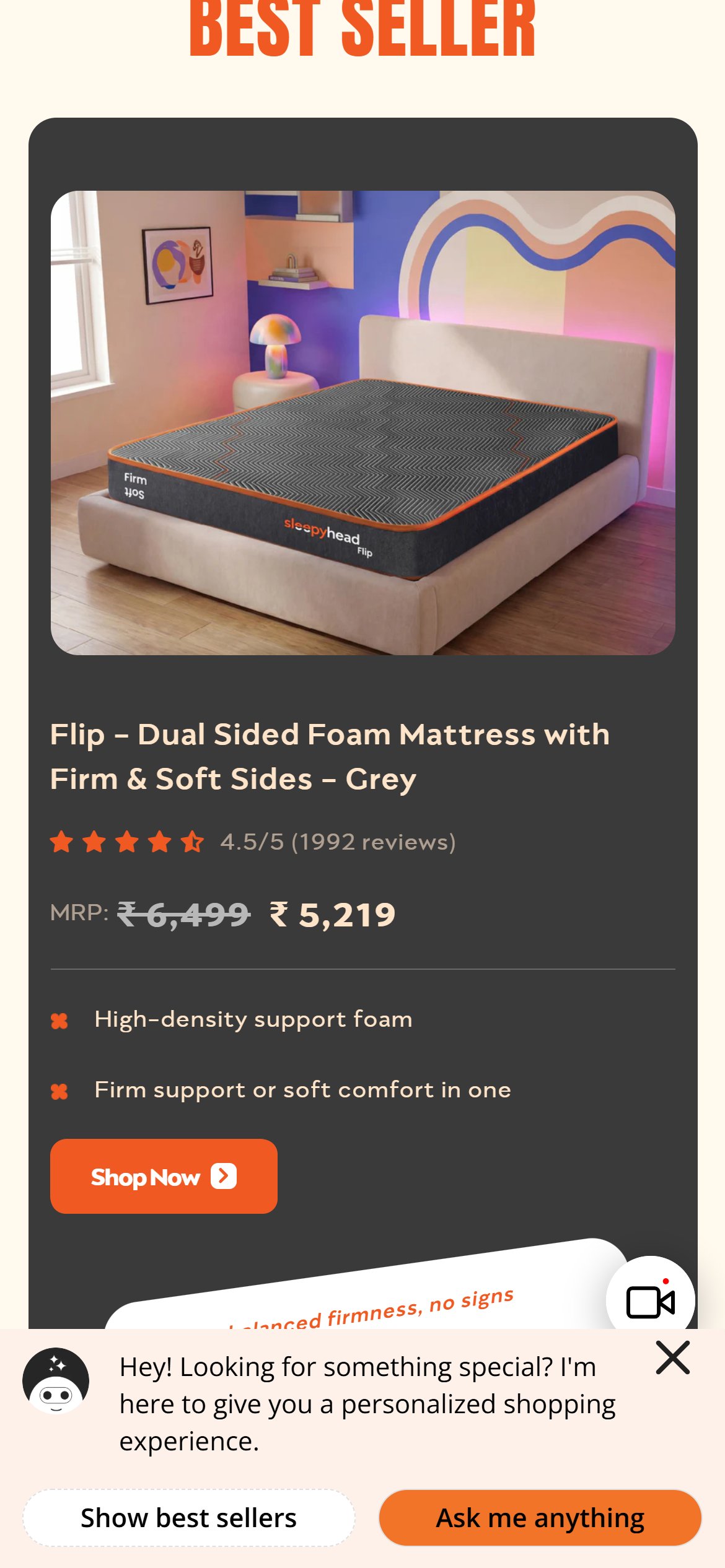
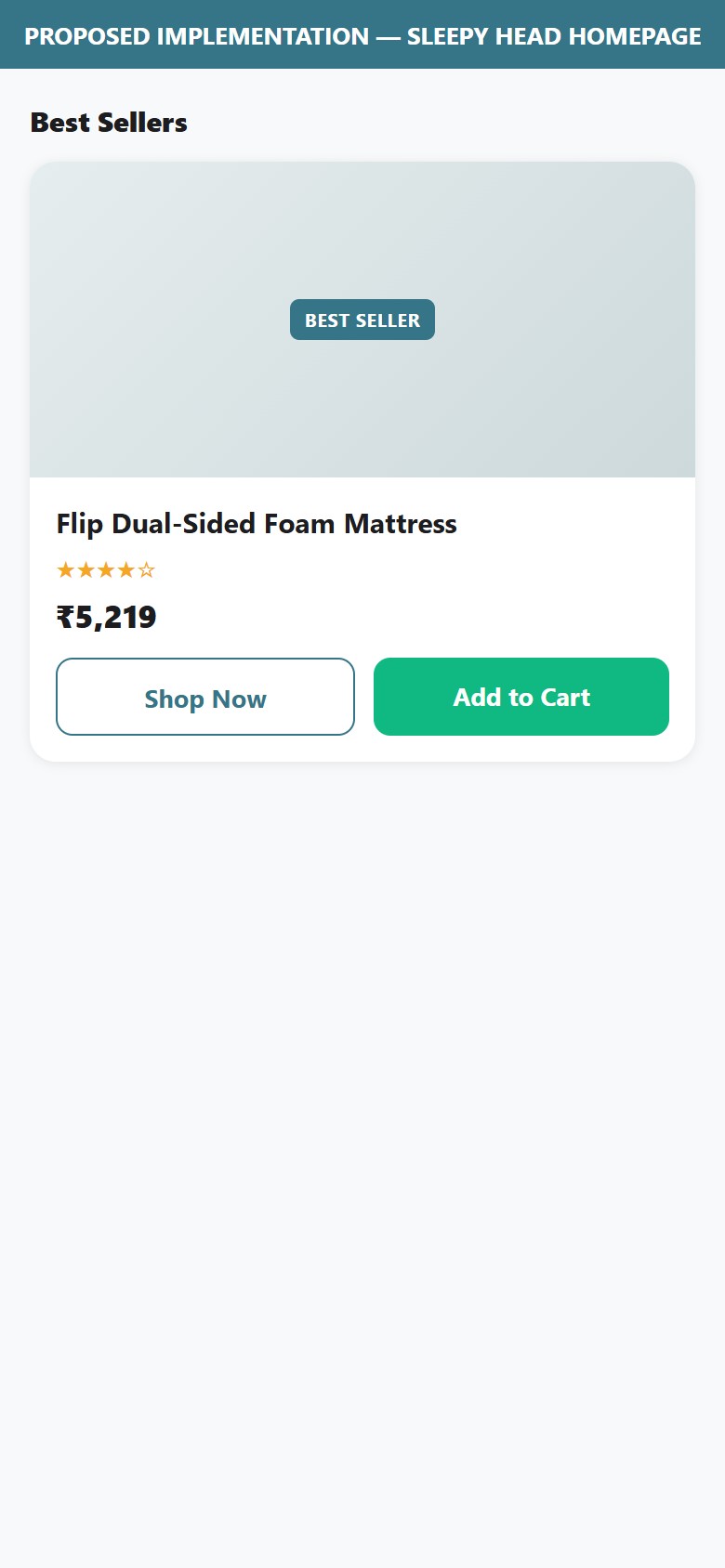
- Each 'BEST SELLER' product card on the homepage (image, title, star rating, MRP/sale price, 2 feature bullets) ends in a 'Shop Now' button that only navigates to the PDP.
- There is no quick-add / ATC control on the card itself, so every homepage purchase intent requires a full PDP page load first.
- For a repeat/returning visitor who already knows the product (e.g. from a WhatsApp or Instagram link), this adds an unnecessary extra page load before they can act.
- Bestseller placement is prime real estate — every added tap between intent and cart is a drop-off opportunity on a homepage that already gets the most traffic on the site.
- At ₹5,219, the Flip mattress on this bestseller card is an impulse-friendly price point — a one-tap add-to-cart would let shoppers act on it without the extra PDP load.
- Add a lightweight 'Add to Cart' or 'Quick Add' action directly on single-variant bestseller cards (e.g. pillows, protectors) where no size/variant choice is required.
- For multi-variant products (mattresses with size options), use a 'Quick Add' that opens a compact variant-picker sheet instead of a full PDP redirect.
- Keep 'Shop Now' as a secondary link for shoppers who want full product detail first.
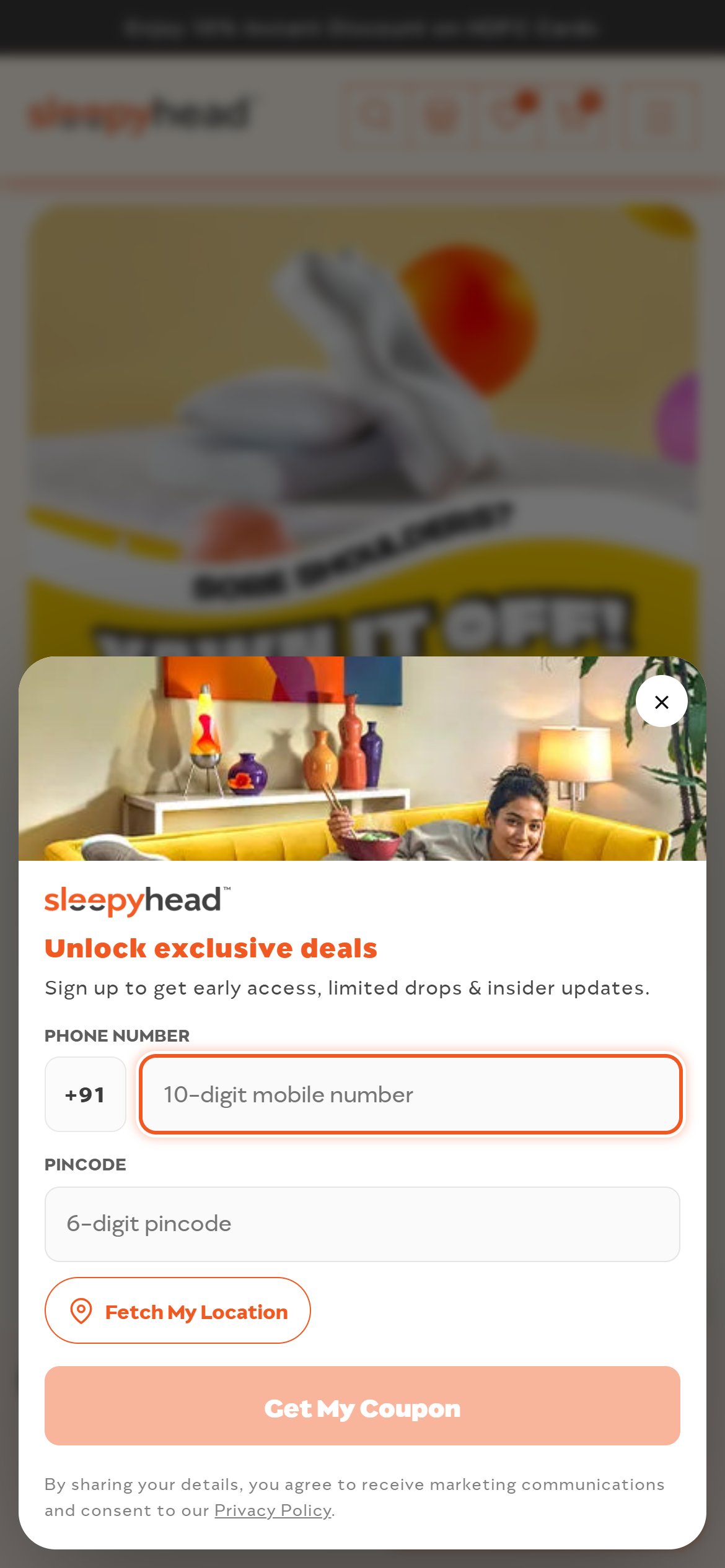
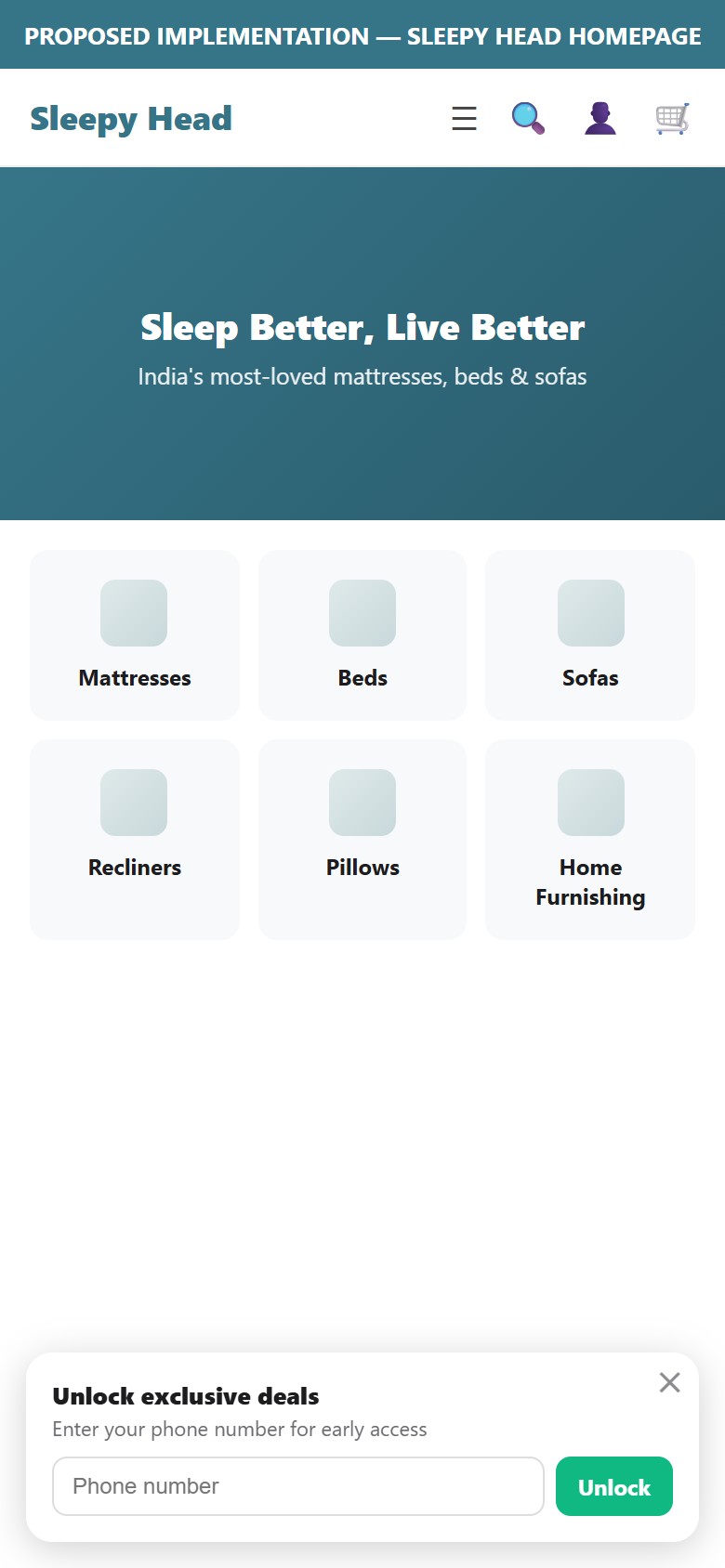
- A phone-number + pincode 'Unlock exclusive deals' modal renders immediately on page load, fully covering the hero banner, top navigation and category links behind a blurred backdrop — reproduced on 3 separate fresh loads.
- The modal shows no exit-intent or scroll-based delay — it appears before the visitor has had any chance to see a single product, category, or the brand's value proposition.
- New visitors arriving from ads or social links land on a phone-number capture form instead of the content that earned the click, which raises first-impression bounce risk.
- The modal is only reliably dismissed via its specific close icon — a visitor who doesn't immediately spot the small 'x' may bounce rather than search for a way past it.
- Delay the popup until at least one scroll or ~10-15 seconds of engagement, so it reads as an offer rather than a gate.
- Reduce the required fields to just one (phone OR pincode, not both) to lower the commitment needed to dismiss or complete it.
- A/B test suppressing the popup for paid-traffic landing sessions in the first visit, showing it only on a second page view.
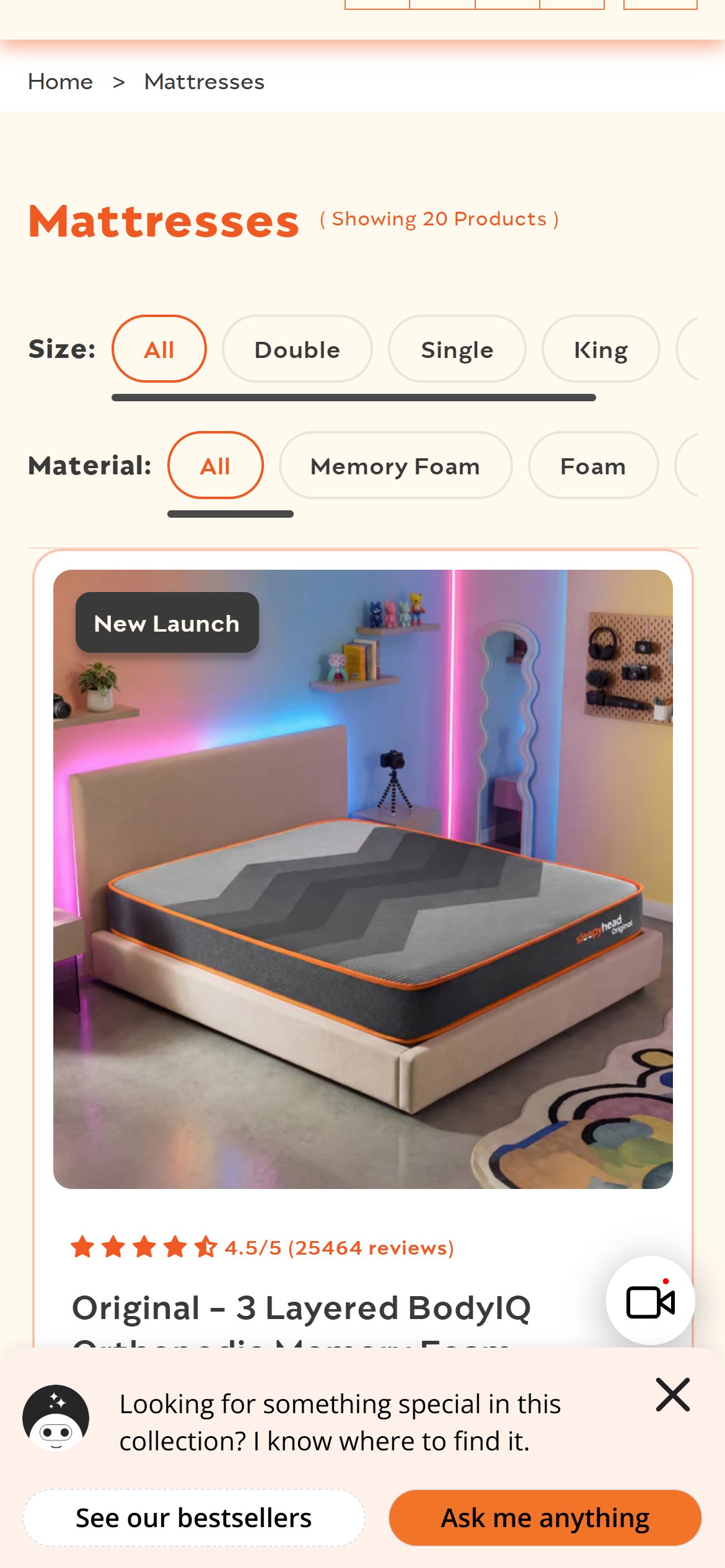
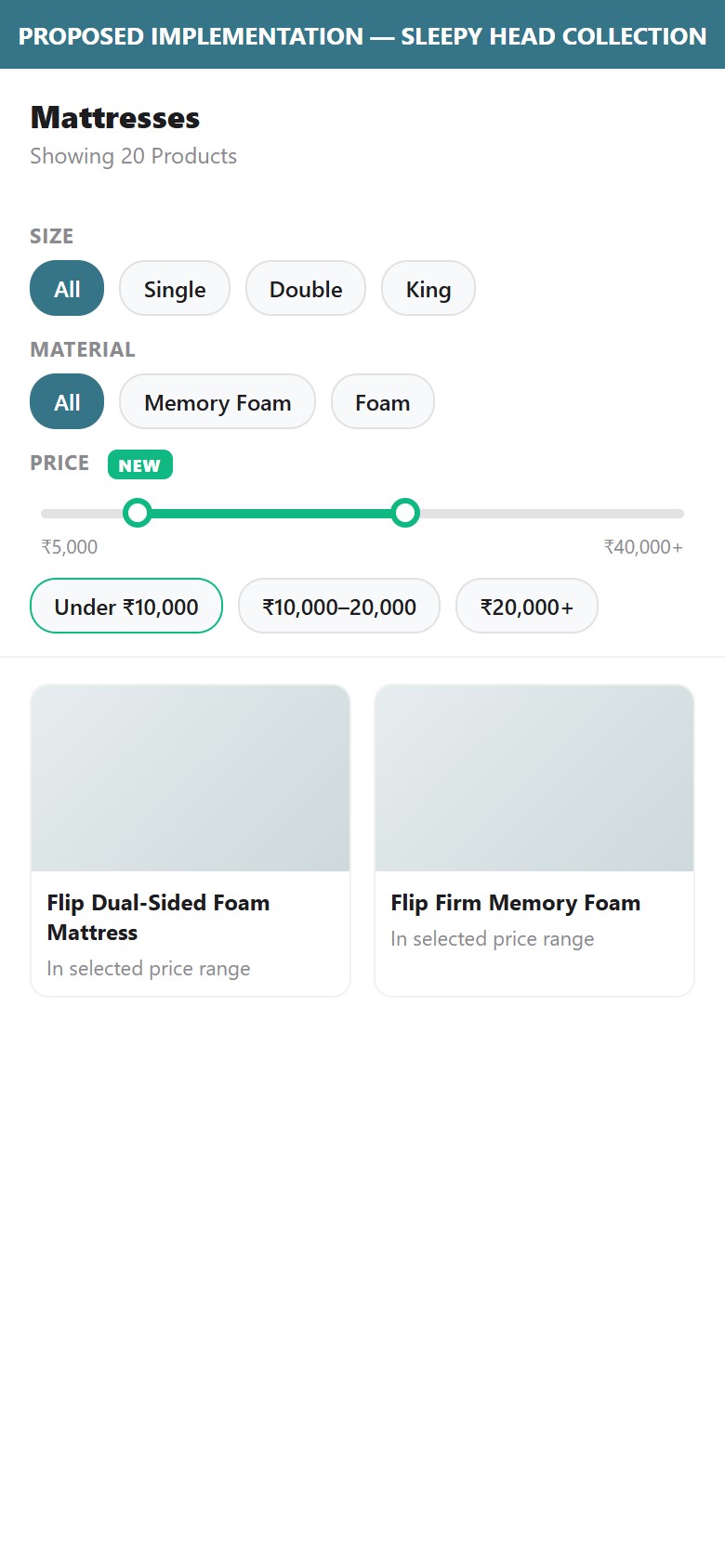
- The Mattresses collection surfaces Size and Material as quick-access filter pills directly above the product grid, but price is not among them — the price filter only appears after opening the full 'Filter' panel.
- Price is the highest-intent filter across a wide ₹5,000 to ₹40,000+ mattress range; keeping it one tap deeper than Size and Material means many budget-led shoppers never realise they can filter by price at all.
- Quick filters set the shopper's mental model — someone scanning only Size/Material pills assumes those are the only ways to narrow results and may leave rather than open the full panel.
- Bringing price to the top level, alongside Size and Material, puts the most useful narrowing tool where it gets used most.
- Promote the price filter out of the full 'Filter' panel into the quick-filter row next to Size and Material — either a compact price slider or tappable price-bucket pills (e.g. 'Under ₹10,000', '₹10,000–20,000', '₹20,000+').
- Keep the full filter panel as the advanced option, but ensure the three highest-intent filters (Size, Material, Price) are always visible upfront.
- Show the live result count as price filters are applied, consistent with the existing 'Showing 20 Products' pattern.
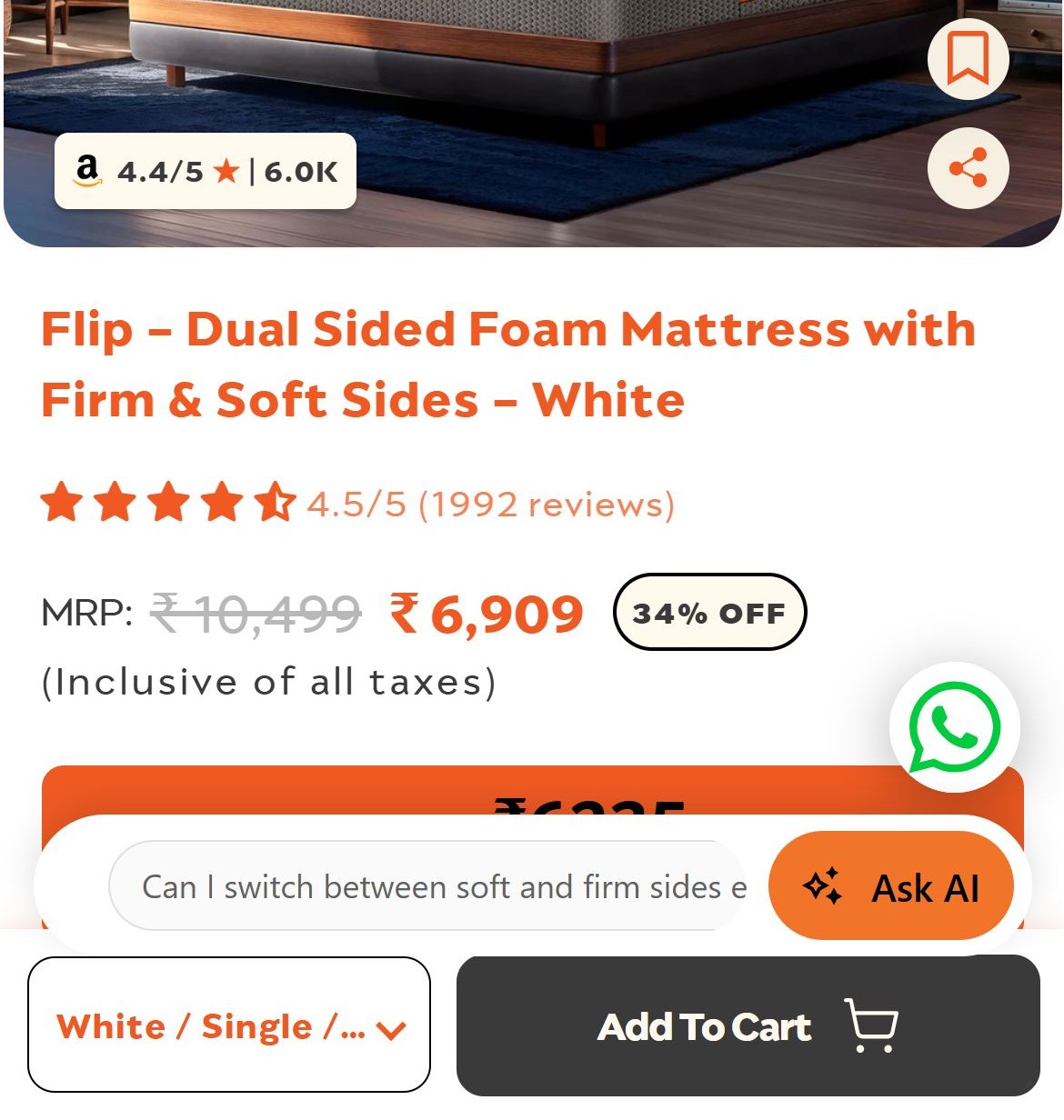
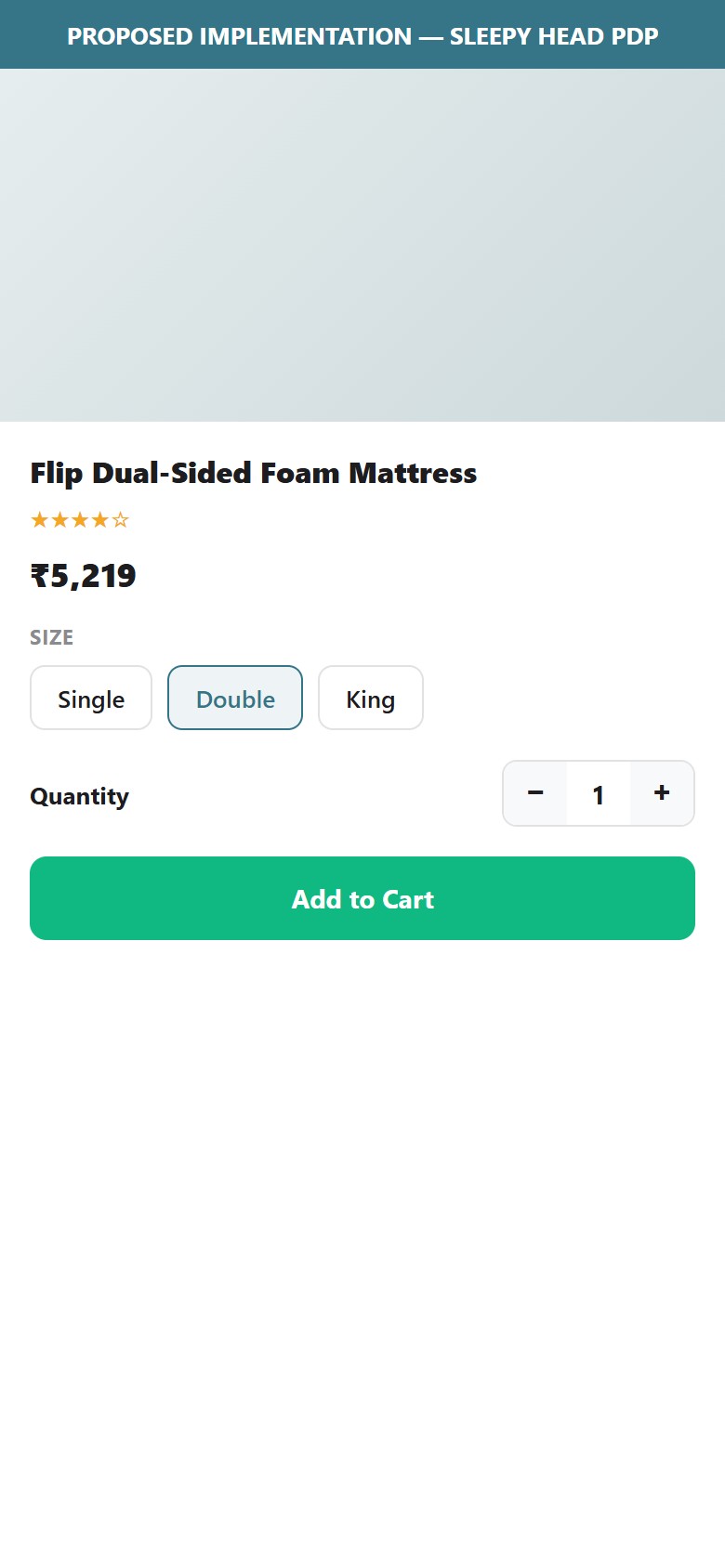
- The 'Flip' mattress PDP shows a variant selector (color/size/thickness) and a single 'Add To Cart' button — there is no +/- quantity control before adding to cart.
- For single-mattress purchases this rarely matters, but the same PDP template is used for pillows, protectors and cushion covers, which are commonly bought in twos (his/hers pillows, matching protectors).
- Shoppers wanting more than one unit must add it once, then locate the quantity stepper inside the cart drawer to increase it — an avoidable extra step for a purchase decision already made.
- This is a low-severity gap since it doesn't block the core mattress purchase path, but it's a quick fix that removes friction on multi-unit home-furnishing items.
- The Flip mattress line starts at ₹5,219, and the same PDP template serves lower-priced, commonly multi-bought items (pillows, protectors) where a pre-cart quantity stepper matters most.
- Add a quantity stepper (+/-) next to the variant selector on the PDP, defaulting to 1.
- Prioritise this for pillow, protector and cushion-cover PDPs where multi-unit purchases are most common.
- Carry the selected quantity through to the Add to Cart action so the cart reflects it immediately.
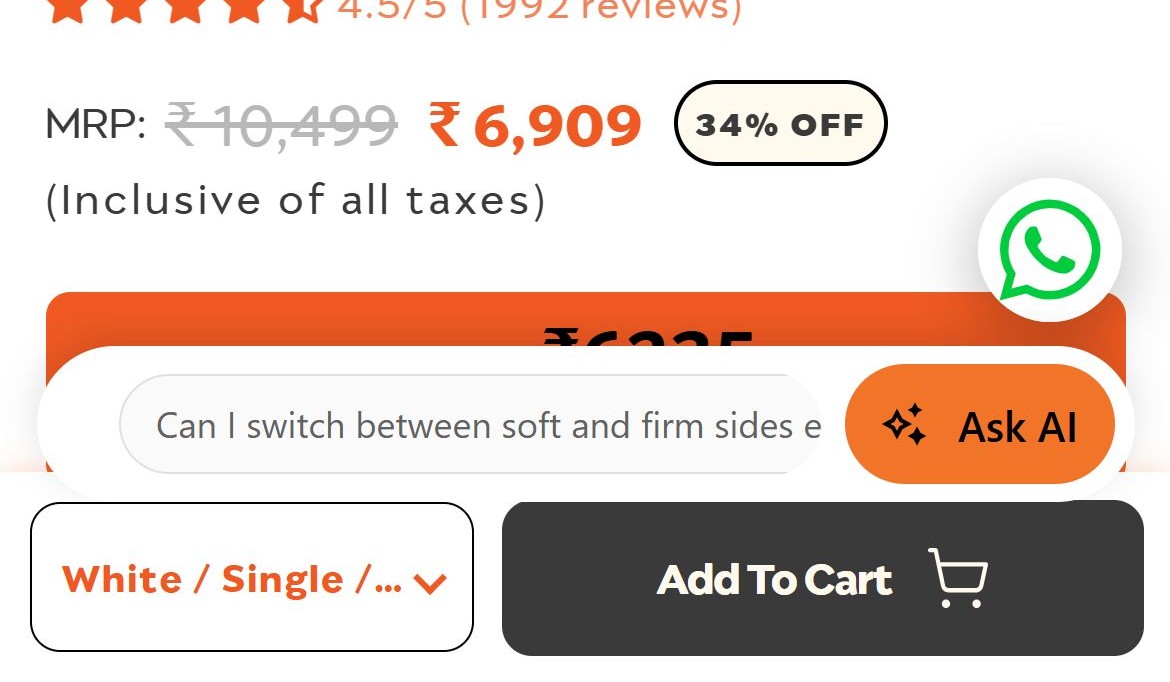
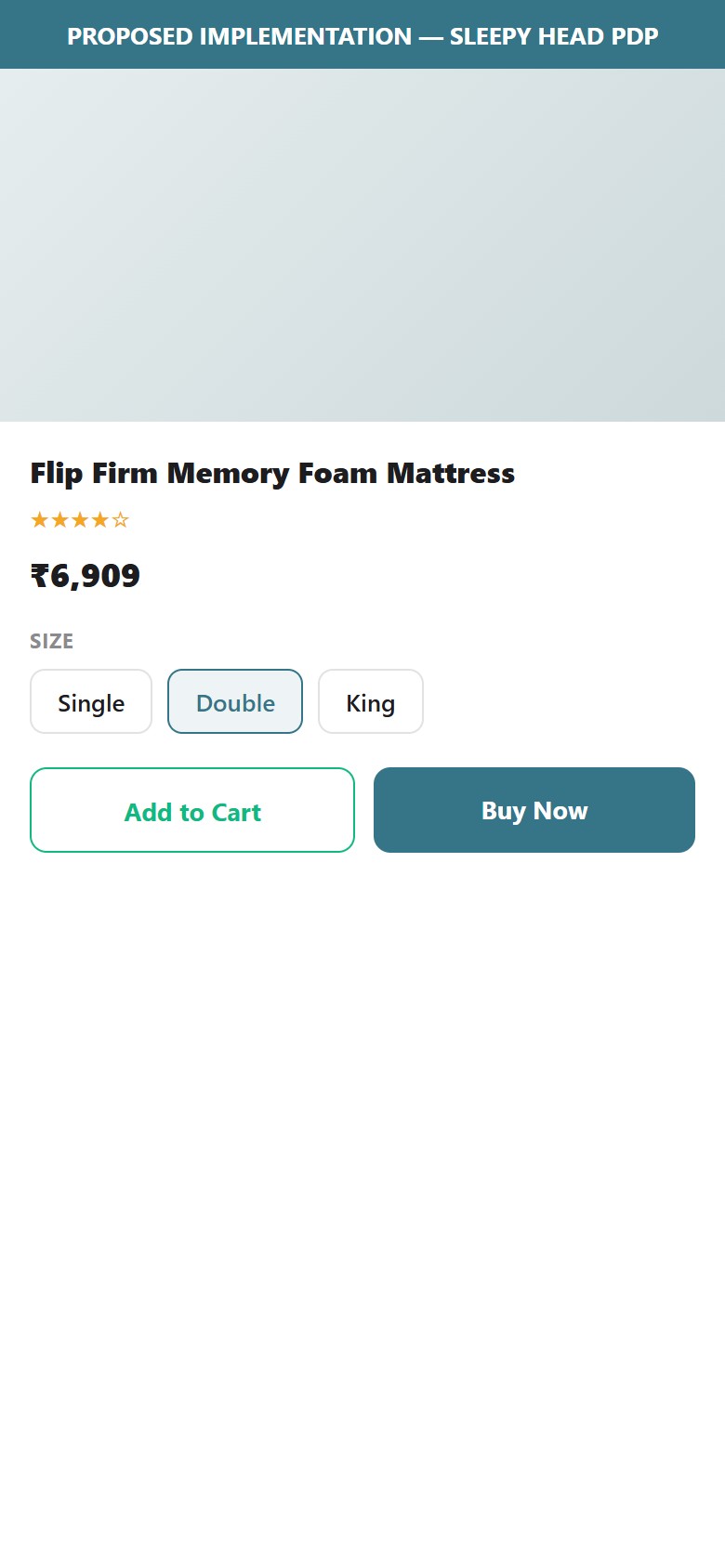
- The PDP's only purchase action is 'Add To Cart' — there is no 'Buy Now' button that would take a ready-to-buy shopper straight to checkout.
- Every purchase, even from a shopper who has already decided, must go through Add to Cart → open cart drawer → tap Checkout — three taps minimum before checkout even starts.
- On a ₹6,909 considered purchase, shoppers who arrive via a retargeting ad or WhatsApp link with buying intent already formed are forced through the same multi-step flow as a first-time browser.
- A direct Buy Now path is a low-effort addition that shortens time-to-checkout specifically for the highest-intent segment of traffic.
- Add a 'Buy Now' button alongside 'Add to Cart' that adds the item and routes directly to checkout, skipping the cart drawer.
- Keep 'Add to Cart' as the primary action for shoppers still comparing sizes/products, with 'Buy Now' as a secondary but visible option.
- Ensure Buy Now respects the same pincode/serviceability check already present on the PDP before proceeding.
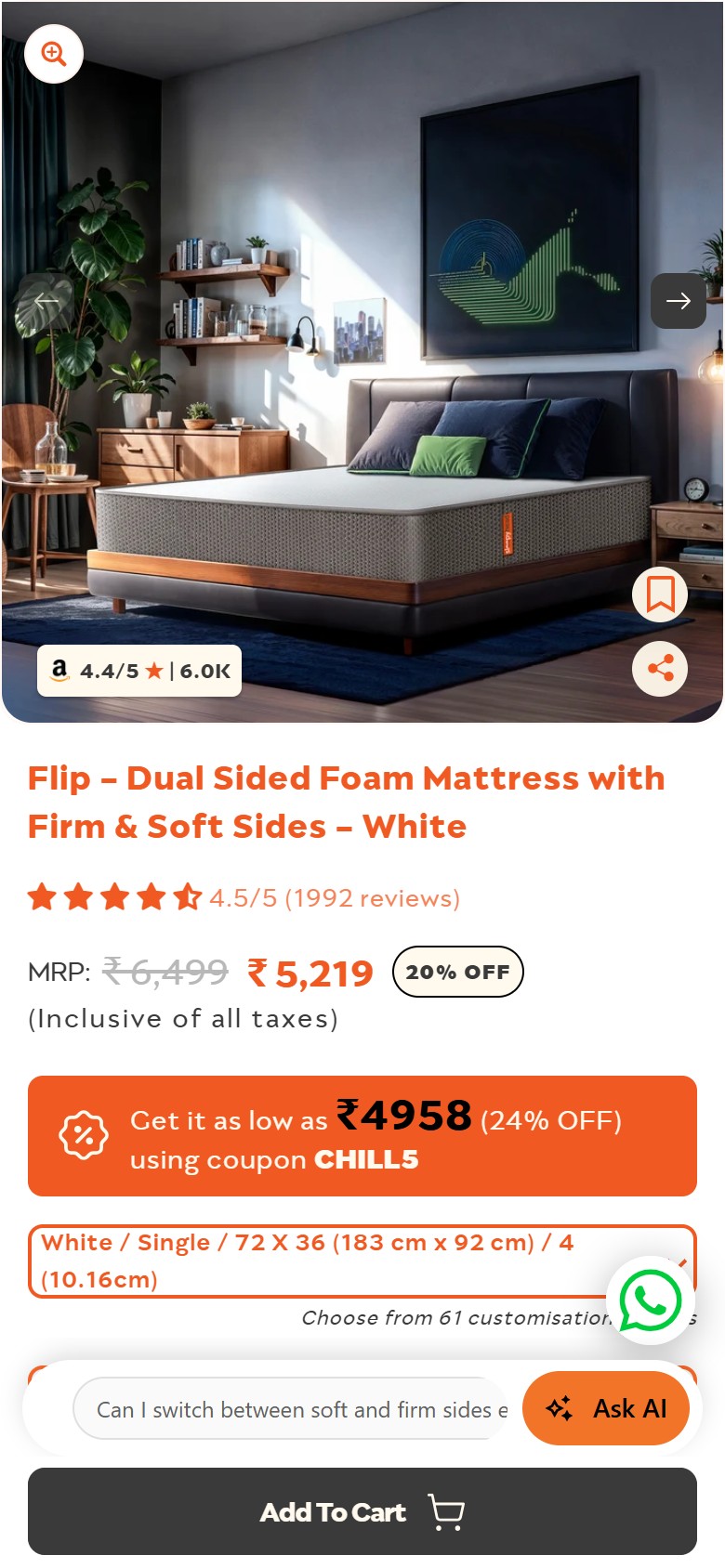
- The Flip mattress PDP presents the price ₹5,219 with a single coupon discount (CHILL5) and an Add to Cart button — there is no EMI, No-Cost-EMI, or pay-monthly / BNPL option anywhere in the purchase area.
- Mattresses on the site span roughly ₹5,000 to ₹40,000+; for higher-ticket configurations, an upfront-only checkout asks price-sensitive shoppers to absorb the whole amount at once, which suppresses conversion on exactly the SKUs that benefit most from financing.
- Both benchmarked competitors make monthly payments a first-class PDP option — SleepyCat surfaces 'No Cost EMI' and 'Buy on EMI', and Duroflex shows a 'Buy on EMI' / per-month figure — so a shopper comparing options sees a low monthly commitment there and a full-price commitment here.
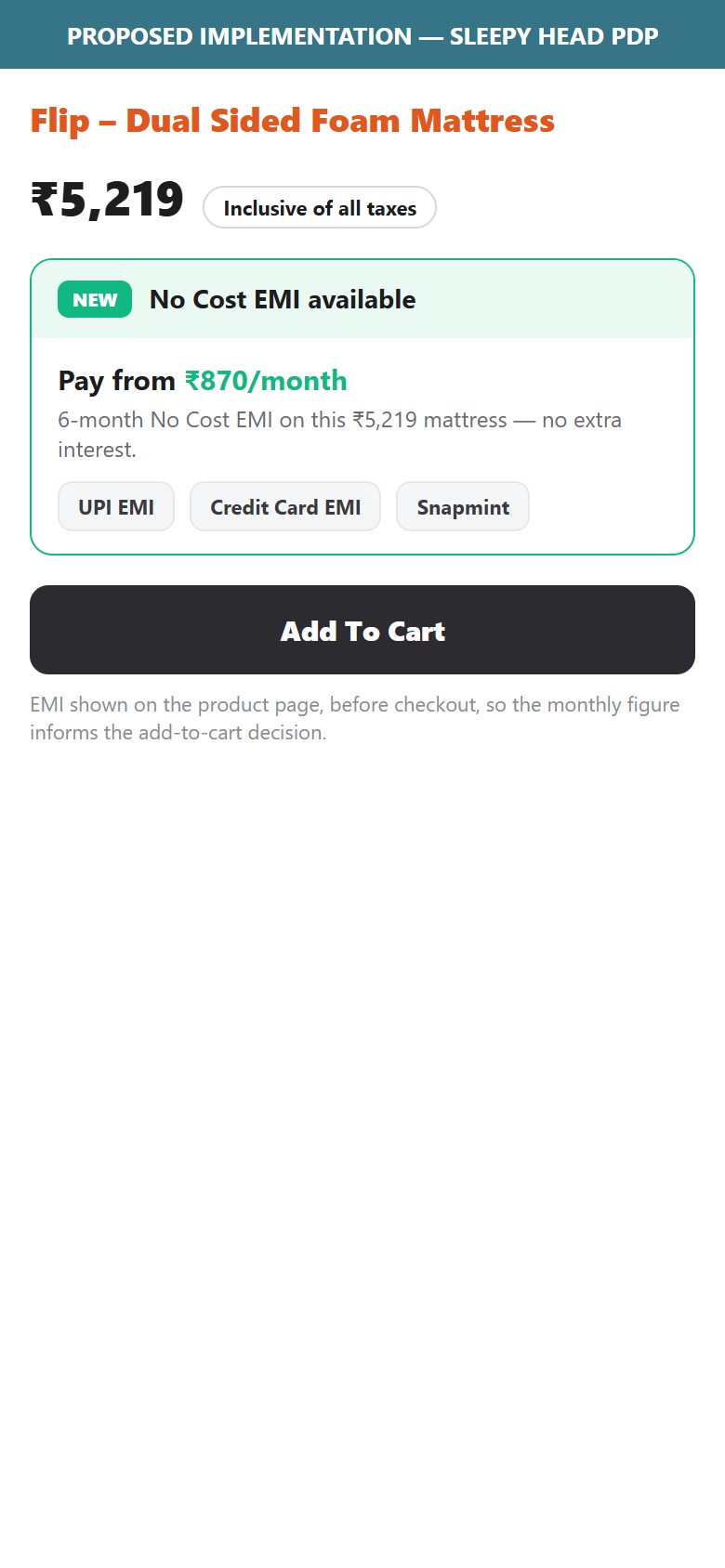
- A No-Cost-EMI line such as 'Pay from ₹870/month' on the ₹5,219 Flip reframes the price as an affordable monthly figure — a proven conversion lever for high-consideration India D2C purchases.
- Add a No-Cost-EMI / pay-monthly widget to the PDP price block (e.g. via Snapmint, Razorpay EMI, or a BNPL provider) showing the lowest monthly figure, e.g. 'No Cost EMI from ₹870/month'.
- Expose EMI on the product page itself, not only at checkout, so the monthly figure influences the add-to-cart decision.
- Prioritise EMI messaging on higher-ticket mattress and furniture configurations where the absolute price is the biggest conversion barrier.
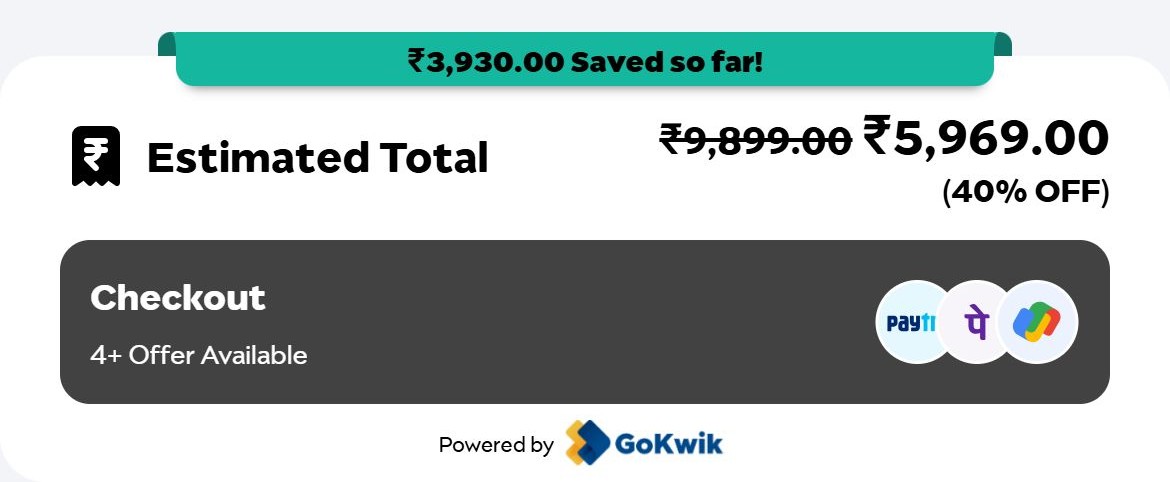
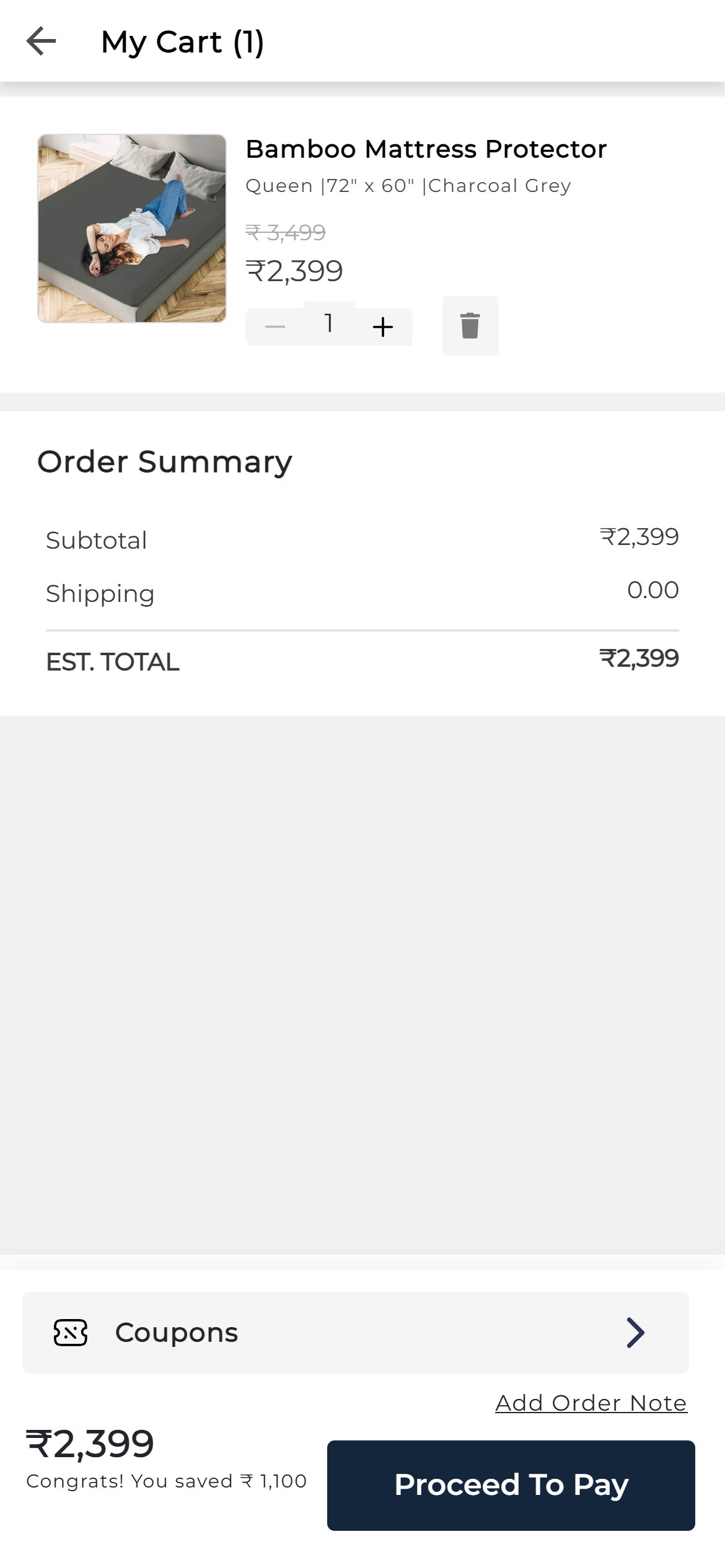
- The cart drawer's order summary shows exactly one line: 'Estimated Total ₹9,899.00 → ₹5,969.00 (40% OFF)' — there is no separate subtotal line and no shipping line (free, flat-fee, or 'calculated at checkout').
- Shoppers cannot see whether the ₹5,969 figure already includes shipping or if it will change at checkout, which is a common source of last-step abandonment.
- On a high-value, high-consideration purchase like a mattress, an unexplained single total line reads as less transparent than a itemised subtotal → shipping → total structure.
- On the highest-intent screen in the funnel, an unexplained single total line reads as a checkout-blocking trust gap — worth resolving before the checkout step.
- Break the order summary into Subtotal, Shipping (or an explicit 'Free' label), Discount, and Total as separate lines.
- If shipping is always free for this AOV tier, state it explicitly ('Free Shipping') rather than omitting the line entirely.
- Keep the existing '₹X saved so far' savings banner — it's a strong element, just needs to sit above a fuller breakdown rather than a single total line.
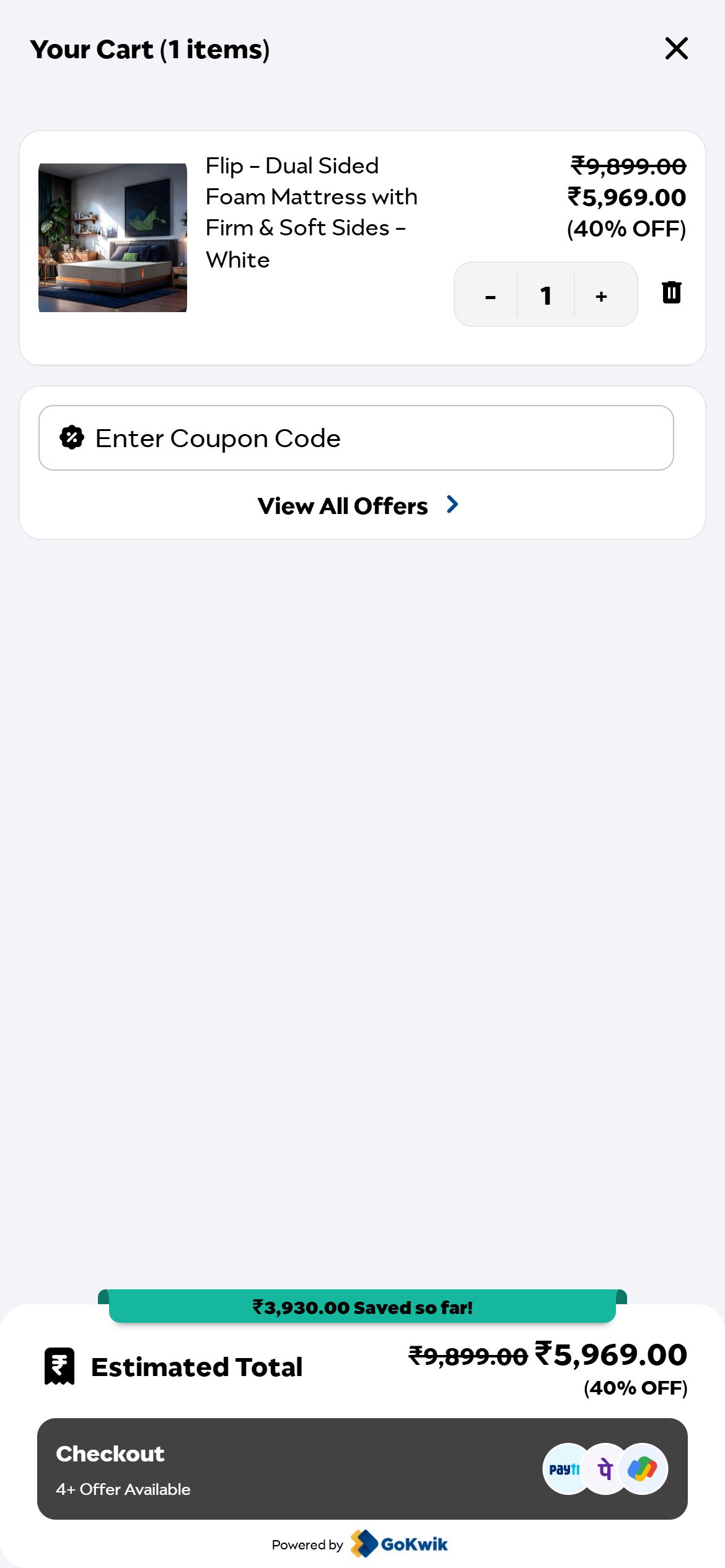
- The cart drawer shows an empty 'Enter Coupon Code' input field open by default, directly below the line item, alongside a 'View All Offers' link — not collapsed behind a toggle.
- An always-visible, empty coupon field signals to every visitor that a discount code probably exists, prompting a share of shoppers to leave the cart and search Google/coupon sites for one.
- That search-away moment is a well-documented cart-abandonment trigger — the shopper may not return, or may return via a competitor's discount-code landing page instead.
- The 'View All Offers' link already gives shoppers a controlled way to find valid discounts, making the open text field redundant risk without added benefit.
- With ₹5,969 already committed in this cart, an always-open coupon field that nudges the shopper off-site to hunt for a code puts a high-value order at avoidable abandonment risk.
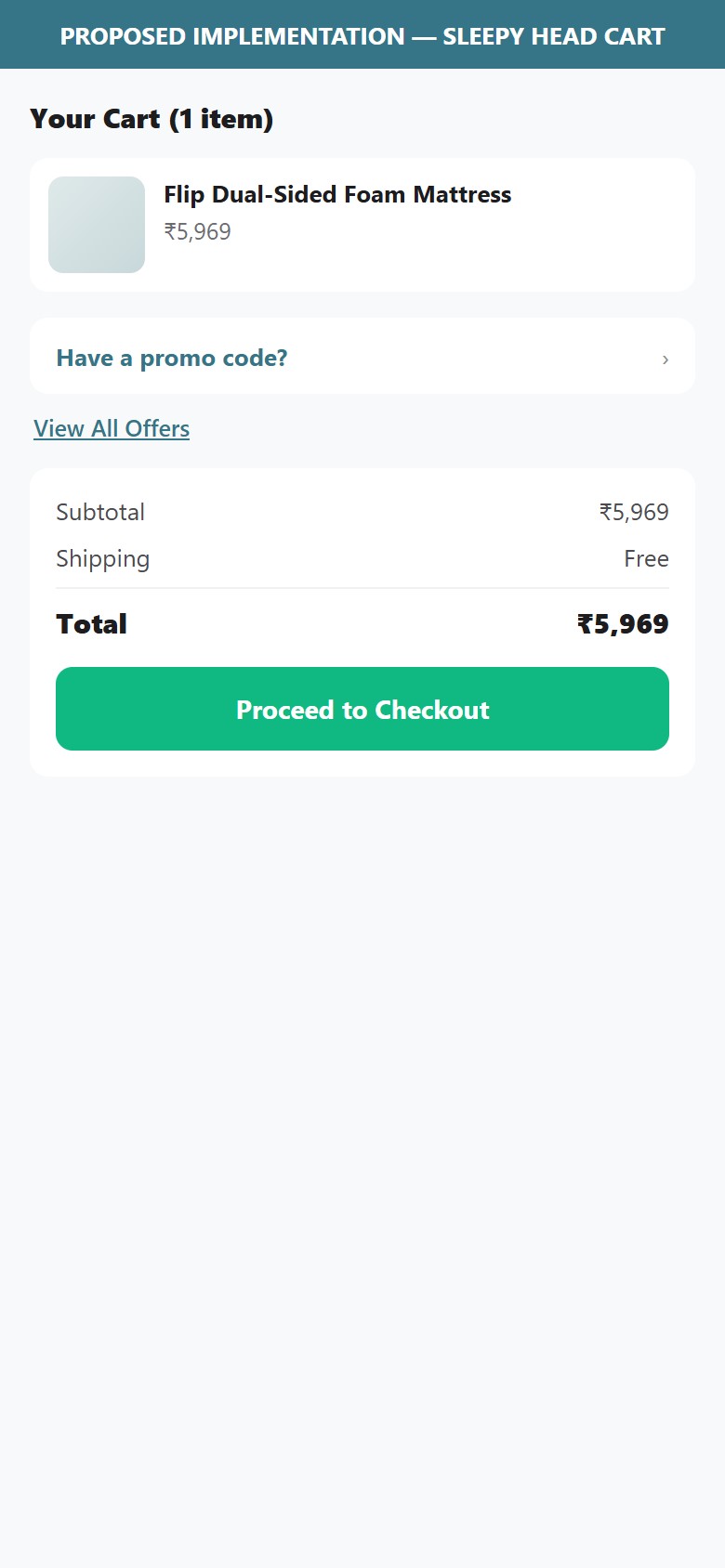
- Collapse the coupon input behind a 'Have a promo code?' link/accordion that expands only on tap.
- Keep the existing 'View All Offers' link as the primary, on-site way to discover valid current promotions.
- If a discount is already auto-applied, show its name/amount as a confirmation line instead of an empty input.
App Ecosystem
What's installed vs what's missing from best-in-class Home & Living stores
Present (14)
Missing (3)
App Stack Assessment
Sleepy Head's app stack is reasonably complete for its category — Judge.me for reviews, GoKwik for checkout, Klaviyo/MoEngage for lifecycle marketing, Gorgias/WhatsApp/BIK.ai for support, plus Wishlist Hero, Referrush and an Instagram feed widget. The stack's main issue is redundancy rather than gaps: two overlapping engagement platforms, two GA4 containers, and three overlapping support/chat tools add cost and script weight (85 third-party scripts observed on a single homepage load) without a clear functional split. The two genuinely missing categories — a loyalty/rewards program and dedicated post-purchase tracking — are both natural fits for a furniture brand with accessory cross-sell potential and multi-day delivery windows.
Confidential — Prepared for Sleepy Head by Growisto | August 2026